
Living in Tallahassee Means Dealing With Humidity — Even in Your Garage
If you've lived in Tallahassee for any length of time, you know the humidity is no joke. From the swampy summers to the mild but damp winters, moisture is a constant companion in North Florida. And while most homeowners think about humidity in terms of their HVAC system or their hair, very few consider what all that moisture is doing to their garage door.
The truth is, Tallahassee's climate puts unique stress on garage doors, their hardware, and their mechanical systems. Understanding how humidity affects your garage door — and what you can do about it — can save you from expensive repairs and unexpected breakdowns.
Rust and Corrosion on Metal Components
Your garage door system is full of metal parts: springs, hinges, rollers, tracks, brackets, and cables. When these components are constantly exposed to humid air, they're at a much higher risk of rust and corrosion.
Rust doesn't just look bad — it causes real mechanical problems:
- Rusted springs lose their flexibility and are more likely to snap without warning. A broken spring is one of the most common — and potentially dangerous — garage door failures.
- Corroded rollers create friction in the tracks, making your door noisy, jerky, or slow to open and close.
- Rusted tracks can cause the door to bind or go off-track entirely.
- Corroded hinges and brackets weaken the structural integrity of the door itself.
In a drier climate, these parts might last for years without attention. In Tallahassee, they need regular inspection and lubrication to stay in good working order.
Wooden Garage Doors and Moisture Damage
If you have a wooden garage door — and many homes in Tallahassee's older neighborhoods do — humidity is an even bigger concern. Wood is hygroscopic, meaning it absorbs and releases moisture from the surrounding air. In our climate, that means your wooden garage door is constantly swelling and contracting.
Over time, this cycle leads to:
- Warping and bowing that prevents the door from sitting flush in its frame
- Cracking and splitting along the grain of the wood
- Peeling paint or stain that exposes raw wood to even more moisture
- Rot, especially along the bottom edge where the door meets the ground
A warped garage door doesn't just look bad — it creates gaps that let in more moisture, insects, and even critters. If you have a wooden door, keeping up with sealing and painting is essential. And if you're noticing significant warping or rot, it may be time to consider replacing the door with a more humidity-resistant material.
Condensation and What It Does to Your Garage
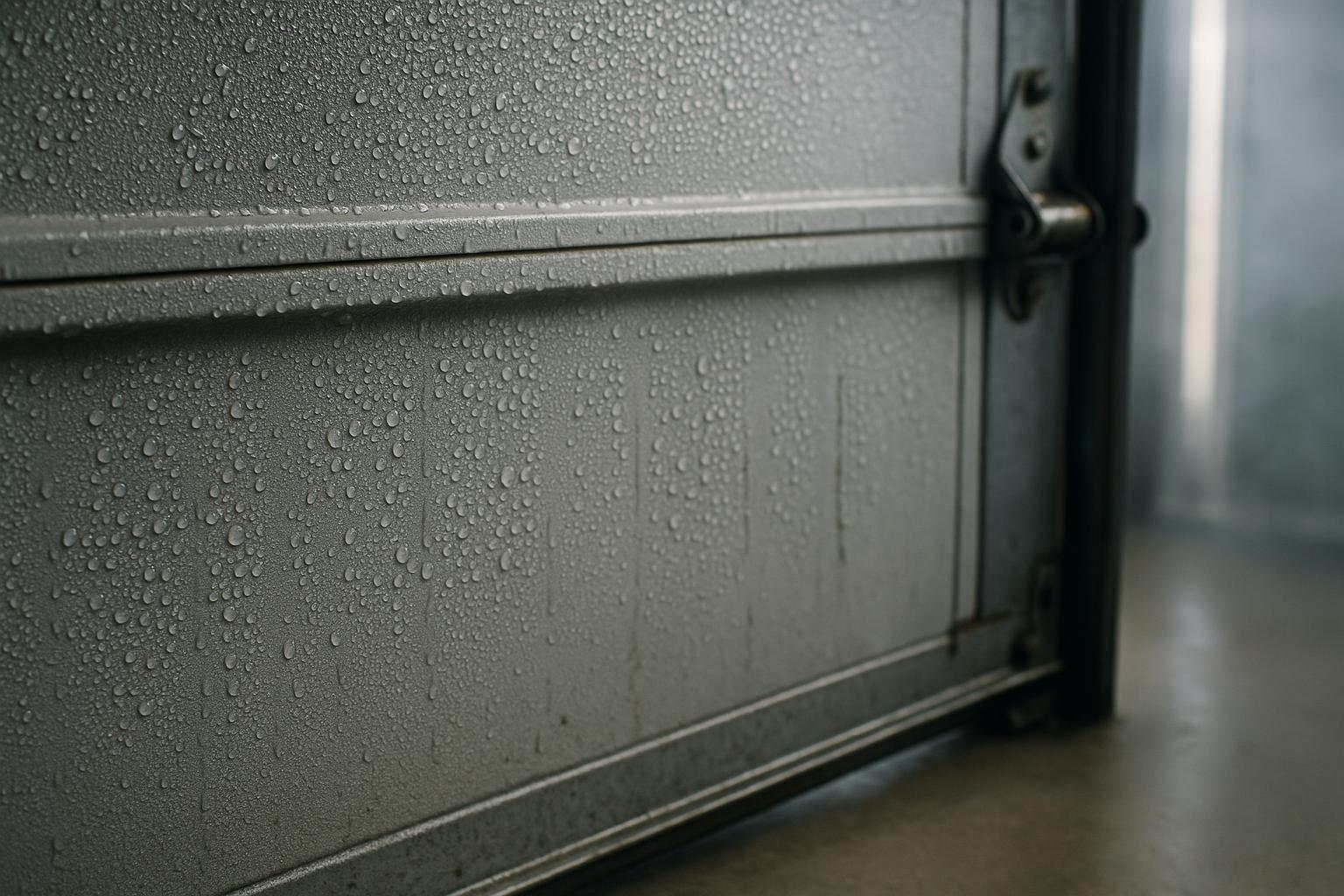
During Tallahassee's hottest months, the temperature difference between the air-conditioned interior of your home and the sweltering garage can cause condensation to form on your garage door and its components. You might notice water droplets on the inside of the door, on the tracks, or even pooling on the garage floor.
This condensation accelerates all of the problems we've already discussed — rust, wood damage, and general wear. It can also create a breeding ground for mold and mildew inside your garage, which is a health concern as well as a maintenance issue.
How to Reduce Condensation
- Improve ventilation in your garage by adding vents or a small exhaust fan
- Insulate your garage door to reduce the temperature differential that causes condensation
- Use a dehumidifier if your garage stays consistently damp
- Seal gaps around the door with proper weatherstripping to control airflow
Your Garage Door Opener Feels the Humidity Too
It's not just the door itself that suffers. Your garage door opener — the motorized unit mounted to your ceiling — contains electrical components, circuit boards, and sensors that are all sensitive to moisture. Humidity can cause:
- Electrical shorts or erratic behavior from the opener
- Corroded contacts on safety sensors, leading to false readings (like the door refusing to close)
- Premature motor wear as the unit works harder to move a door that's swollen or binding in its tracks
If your garage door opener has started acting unpredictably — opening or closing on its own, failing to respond to the remote, or making unusual sounds — humidity-related issues could be the culprit.
Seasonal Maintenance Makes All the Difference
The single best thing you can do to protect your garage door from Tallahassee's humidity is to stay on top of regular maintenance. We recommend a professional tune-up at least twice a year — ideally in the spring before the heavy humidity sets in, and again in the fall.
A thorough garage door maintenance visit should include:
- Lubricating all moving parts with a silicone-based lubricant (not WD-40, which can actually attract dust and grime)
- Inspecting springs, cables, and rollers for signs of rust or wear
- Checking the weatherstripping along the bottom and sides of the door
- Testing the balance of the door to ensure the springs are properly calibrated
- Cleaning and aligning the safety sensors
- Inspecting the door panels for warping, cracking, or rot
These steps take a trained technician less than an hour, but they can add years to the life of your garage door system.
Choosing the Right Garage Door for Our Climate
If you're in the market for a new garage door — whether you're building a new home or replacing an aging door — material choice matters a lot in our part of Florida. Here's a quick comparison:
- Steel doors are the most popular choice and hold up well in humidity, especially if they have a baked-on polyester or vinyl finish. Look for doors with rust-resistant coatings.
- Aluminum doors are naturally rust-resistant and lightweight, making them a great option for Tallahassee homes.
- Fiberglass and vinyl doors are essentially impervious to moisture, though they can become brittle over time with heavy UV exposure.
- Wood doors are beautiful but require the most upkeep in a humid climate. If you love the look of wood, consider a steel door with a wood-grain finish as a low-maintenance alternative.
Don't Wait for a Breakdown
Humidity damage is gradual. You might not notice the rust forming on your springs or the slight warp developing in your door panels until something fails. And garage door failures tend to happen at the worst possible times — when you're late for work or trying to get the car into the garage before a summer thunderstorm rolls through.
At Tallahassee Garage Door Service, we help homeowners across Tallahassee, Crawfordville, Quincy, and the surrounding areas keep their garage doors in top shape despite the challenging climate. Whether you need a maintenance tune-up, a spring replacement, or a full door installation with humidity-resistant materials, we're here to help.
Give us a call to schedule a maintenance visit or to talk about upgrading your garage door to something better suited for North Florida's weather. We'll show up on time, explain what we find in plain English, and make sure your garage door is ready to handle whatever our climate throws at it.