
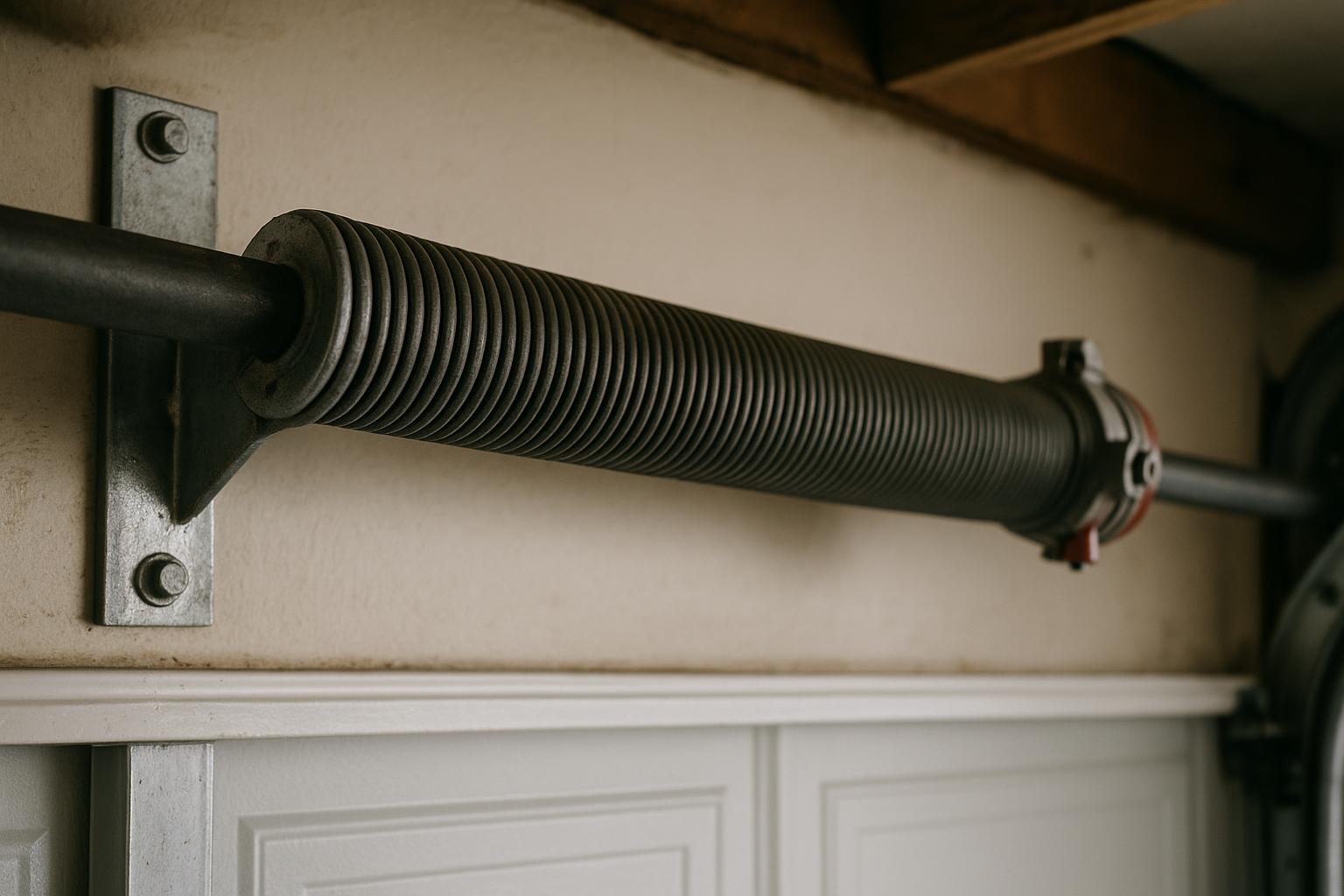
Your Garage Door Springs Are Doing More Work Than You Think
Most homeowners in Tallahassee don't think about their garage door springs until something goes wrong. And when something does go wrong, it usually happens at the worst possible time — you're running late for work, loading groceries into the car, or trying to get out of a sudden Florida downpour.
The truth is, your garage door springs are the hardest-working components in the entire system. They bear the full weight of the door every time it opens and closes, and they have a finite lifespan. A standard torsion spring is rated for roughly 10,000 cycles — one cycle being a single open-and-close. If you use your garage door four times a day, that's about seven years of life.
Knowing the warning signs of failing springs can save you from a stressful breakdown and potentially dangerous situation. Here's what to watch for and what to do when the time comes.
What Do Garage Door Springs Actually Do?
Your garage door is heavy — most residential doors weigh between 130 and 250 pounds, and some insulated or custom doors weigh even more. Without springs, your garage door opener would have to lift all of that weight on its own, which it simply isn't designed to do.
Springs store mechanical energy and use it to counterbalance the door's weight. When the springs are working properly, the door should feel almost weightless if you lift it by hand. There are two main types of springs used in residential garage doors:
- Torsion springs — Mounted on a metal shaft above the door opening. These are the most common type in modern garage doors and provide smooth, controlled movement.
- Extension springs — Mounted along the horizontal tracks on either side of the door. These are more common in older installations and stretch to store energy.
Both types wear out over time, and both can be dangerous to replace without proper training and tools.
7 Warning Signs Your Garage Door Springs Are Failing
1. The Door Feels Unusually Heavy
Try disconnecting your opener by pulling the emergency release cord, then lift the door manually. If it feels significantly heavier than it used to or you struggle to lift it past your waist, your springs are likely losing tension. A properly balanced door should stay open on its own about three to four feet off the ground.
2. The Door Opens Only Partway
If your garage door opens a foot or two and then stops, the springs may not have enough force left to lift the full weight of the door. Your opener might strain and give up, or the door may just hang there halfway. This is a clear sign that the springs are nearing the end of their life.
3. You Heard a Loud Bang From the Garage
A broken torsion spring releases its stored energy all at once, and the sound is unmistakable — many Tallahassee homeowners describe it as sounding like a gunshot or a car backfiring inside the garage. If you heard a loud bang and now your door won't open, check the springs above the door. A broken spring will have a visible gap in the coil.
4. There's a Visible Gap in the Spring
When a torsion spring breaks, it typically snaps near the center and the two halves separate, leaving a noticeable gap of a few inches. This is the most obvious visual confirmation that you need a replacement. Do not attempt to operate the door if you see this.
5. The Door Closes Too Fast
Springs control the speed at which your door descends. If the door slams shut or drops faster than usual, the springs aren't providing enough resistance. This is a safety hazard, especially for families with children or pets who may be near the door.
6. The Cables Are Loose or Hanging
The lift cables on your garage door are connected to the spring system. When a spring breaks, the cables can lose tension and appear slack, hanging loosely alongside the door. Loose cables are a secondary symptom that almost always points back to a spring problem.
7. The Door Looks Crooked When Opening
If your door has two extension springs and one breaks while the other is still functional, the door will lift unevenly. One side rises while the other lags behind, causing the door to tilt or bind in the tracks. Continuing to operate the door in this condition can cause additional damage to the tracks, rollers, and opener.
Why You Shouldn't Replace Garage Door Springs Yourself
We understand the DIY spirit — it's alive and well here in Tallahassee. But garage door spring replacement is one job that genuinely belongs to professionals. Here's why:
- Extreme tension: Torsion springs are wound under tremendous force. A spring that slips during installation can cause serious injury.
- Specialized tools required: Proper replacement requires winding bars, clamps, and other tools that most homeowners don't have.
- Precise calibration: Springs must be wound to the exact number of turns for your specific door weight and size. Too few turns and the door won't open properly. Too many and you risk the spring snapping prematurely.
- Paired replacement: When one spring breaks, the other is usually close behind. A professional will recommend replacing both springs at the same time to ensure balanced operation and avoid a repeat service call in a few months.
Every year, emergency rooms across the country treat thousands of injuries related to DIY garage door spring repairs. It's simply not worth the risk.
How Long Should Garage Door Springs Last in Tallahassee?
The standard 10,000-cycle lifespan is a general guideline, but several factors specific to living in Tallahassee can affect how long your springs last:
- Frequency of use: Families that come and go frequently may cycle their door six to eight times a day, cutting the spring's lifespan considerably.
- Humidity and corrosion: Tallahassee's humid subtropical climate accelerates rust and corrosion on metal components. Springs that aren't properly lubricated will deteriorate faster.
- Lack of maintenance: Regular lubrication with a silicone-based spray can extend spring life significantly. Most homeowners skip this simple step.
- Door weight: Heavier doors put more stress on springs with every cycle. If you've upgraded to an insulated door without upgrading the springs, they'll wear out sooner.
High-cycle springs rated for 25,000 or even 50,000 cycles are available and are a smart investment if you plan to stay in your home for many years. We often recommend these to homeowners who want to avoid dealing with spring replacement again for a long time.
What to Do When Your Springs Break
If you suspect your garage door springs have broken or are failing, follow these steps:
- Stop using the door immediately. Operating a door with broken or weakened springs puts stress on the opener and can cause the door to fall unexpectedly.
- Do not try to manually force the door open or closed. The door is extremely heavy without functioning springs.
- Keep people and pets away from the door. A door with compromised springs is unpredictable.
- Call a professional. A trained technician can safely replace the springs, inspect the rest of the system, and have your door working again quickly.
At Tallahassee Garage Door Service, we carry the most common spring sizes on our trucks so that most repairs can be completed in a single visit. We'll explain exactly what happened, show you the worn or broken parts, and give you a clear price before we start any work.
Don't Wait for a Breakdown
If your garage door is showing any of the warning signs listed above, it's better to address the problem now rather than wait for a complete failure. A proactive spring replacement is faster, often less expensive, and far less stressful than an emergency repair when you're stuck in your garage on a Monday morning.
If you're in Tallahassee or the surrounding areas — including Crawfordville, Quincy, Havana, Monticello, and Midway — give us a call. We'll take a look, give you an honest assessment, and get your garage door back to working the way it should.