
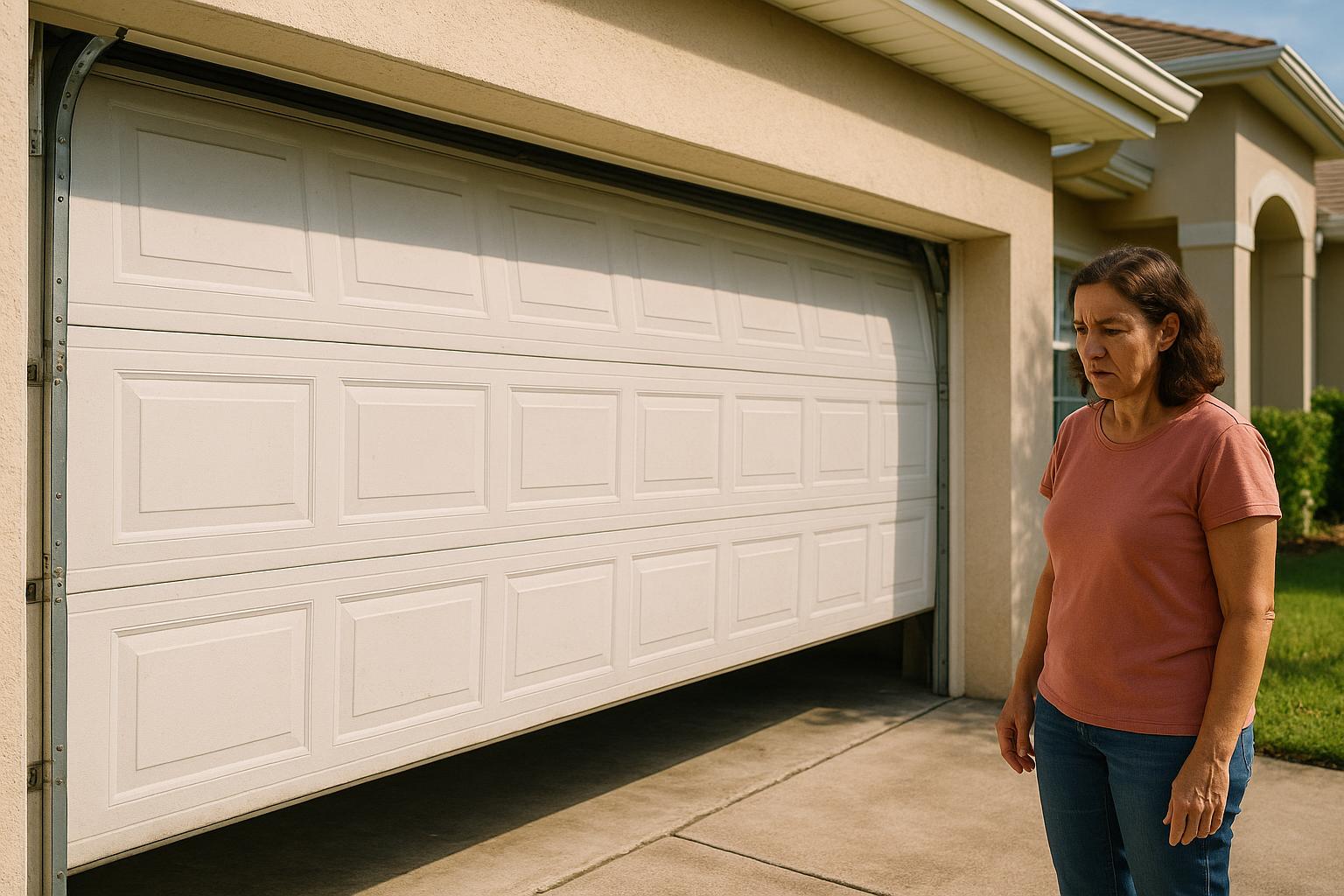
Your Garage Door Shouldn't Sound Like That
You press the button, and instead of the smooth hum you're used to, your garage door greets you with a grinding screech, a loud bang, or a rhythmic rattling that makes the neighbors look over. It's not just annoying — strange garage door noises are almost always a warning sign that something needs attention.
If you're a homeowner in Tallahassee dealing with a noisy garage door, you're not alone. It's one of the most common service calls we get at Tallahassee Garage Door Service. The good news is that most noises point to identifiable, fixable problems. The key is knowing what you're hearing and acting before a minor issue turns into a major repair.
Grinding or Scraping Sounds
A grinding or scraping noise when your garage door opens or closes usually means metal is rubbing against metal somewhere it shouldn't be. The most common culprits include:
- Worn rollers: Steel rollers wear down over time and can start grinding against the track. Nylon rollers are quieter and last longer, and upgrading to them is one of the easiest ways to reduce garage door noise.
- Misaligned tracks: If the vertical or horizontal tracks have shifted even slightly, the door can scrape against them as it moves. This puts extra stress on the entire system and can lead to the door getting stuck.
- Lack of lubrication: Metal components need regular lubrication to move smoothly. Without it, friction builds up and produces that unpleasant grinding sound.
If you hear grinding, take a look at the rollers and tracks. If you see visible wear, metal shavings, or gaps between the rollers and the track, it's time to call a professional before the problem gets worse.
Squealing or Squeaking Noises
A high-pitched squeal or squeak is one of the most common garage door complaints, and it's often one of the simplest to fix. In many cases, the issue is dry or dirty hinges, springs, or bearings that just need lubrication.
We recommend using a garage door-specific lubricant — not WD-40, which is a solvent and not a long-term lubricant. Apply it to the hinges, rollers, springs, and bearing plates a couple of times a year. Here in Tallahassee, where heat and humidity can break down lubricants faster than in drier climates, you may want to do this every three to four months.
However, if lubrication doesn't solve the squealing, the noise could indicate a more serious issue like a worn torsion spring under high tension. Never attempt to adjust or replace garage door springs yourself — they're under extreme pressure and can cause serious injury. That's a job for a trained technician.
Banging or Popping Sounds
A sudden bang or pop when the door moves is harder to ignore — and for good reason. These sounds often point to:
- Torsion spring issues: A loud bang from the garage when no one is operating the door can mean a spring has broken. You'll usually find the door won't open afterward.
- Loose hardware: Over time, the nuts, bolts, and brackets that hold your garage door system together can loosen due to the constant vibration of daily use. A loose bracket can cause a popping or banging sound each time the door passes that point in the track.
- Panel problems: Warped or damaged panels can pop or bang as they flex during operation. This is especially common with older wooden doors that have been exposed to Tallahassee's humid summers for years.
If you hear a single loud bang and your door stops working, don't try to force it open. Call a garage door repair professional to inspect the springs and cables safely.
Rattling or Vibrating Sounds
A persistent rattle or vibration usually means something is loose. The garage door system has dozens of moving parts, and regular use naturally loosens hardware over time. Common sources of rattling include:
- Loose chain or belt on the opener: If the drive chain has too much slack, it can slap against the rail and create a rattling noise. Belt-drive openers are generally quieter, but belts can also loosen with age.
- Loose nuts and bolts: A quick inspection with a socket wrench can often solve rattling. Tighten the bolts on the hinges, track brackets, and opener mounting bracket.
- Vibrating opener: If the garage door opener itself is vibrating against the ceiling, anti-vibration pads can help dampen the noise. This is a common issue in homes where the garage is directly below a bedroom or living space.
Clicking or Ticking Sounds
A repetitive clicking or ticking sound is often related to the garage door opener rather than the door itself. It can mean:
- Stripped gears inside the opener: If you hear clicking but the door doesn't move, the opener's internal gears may be worn out. This is common in older chain-drive models.
- Misaligned safety sensors: The photoelectric sensors at the bottom of the door frame can sometimes cause the opener to click repeatedly if they're dirty or misaligned. Check that they're clean and that their indicator lights are steady.
- Failing capacitor: The capacitor helps start the opener motor. When it's going bad, you may hear a clicking sound as the motor tries and fails to engage.
When to DIY and When to Call a Pro
Some garage door noise fixes are safe for homeowners to handle on their own:
- Lubricate moving parts with a silicone-based or lithium-based garage door lubricant.
- Tighten loose hardware with a socket wrench — just don't touch the bottom brackets connected to the cables, as those are under spring tension.
- Clean the tracks with a damp cloth to remove dirt and debris. Don't lubricate the tracks themselves, as this can cause the rollers to slide instead of rolling properly.
However, you should call a professional for anything involving springs, cables, or the opener's internal components. These repairs require specialized tools and training to perform safely.
Keep Your Garage Door Running Quietly
The best way to prevent strange noises is regular maintenance. At Tallahassee Garage Door Service, we offer maintenance and tune-up services that include a full inspection, lubrication, hardware tightening, balance testing, and safety checks. Most homeowners only think about their garage door when something goes wrong, but a little preventive care goes a long way toward avoiding unexpected breakdowns and costly repairs.
If your garage door is making a noise that doesn't sound right, don't wait for it to get louder. Whether you're in Tallahassee, Crawfordville, Quincy, or any of the surrounding communities, our team is ready to diagnose the problem and get your door running smoothly and quietly again. Give us a call and we'll take care of it.