
Tallahassee Storm Season and Your Garage Door
If you've lived in Tallahassee for more than a year, you know the drill. Summer thunderstorms roll in fast, and power outages follow. Sometimes the lights flicker back on in a few minutes. Other times, you're waiting hours — or even days after a major storm.
When the power goes out, one of the first things many homeowners realize is that their garage door won't open. If your car is parked inside, that's more than an inconvenience — it can throw off your entire day. The good news is that every modern garage door opener comes with a manual release that lets you operate the door by hand. The bad news is that most people have never used it and aren't sure how it works.
This guide walks you through exactly what to do when you lose power, how to safely operate your garage door manually, and a few things you can do now to prepare before the next outage catches you off guard.
How the Manual Release Works
Every automatic garage door opener manufactured in the last several decades includes an emergency release mechanism. It's designed to disconnect the door from the motorized opener so you can lift the door manually.
Here's what to look for:
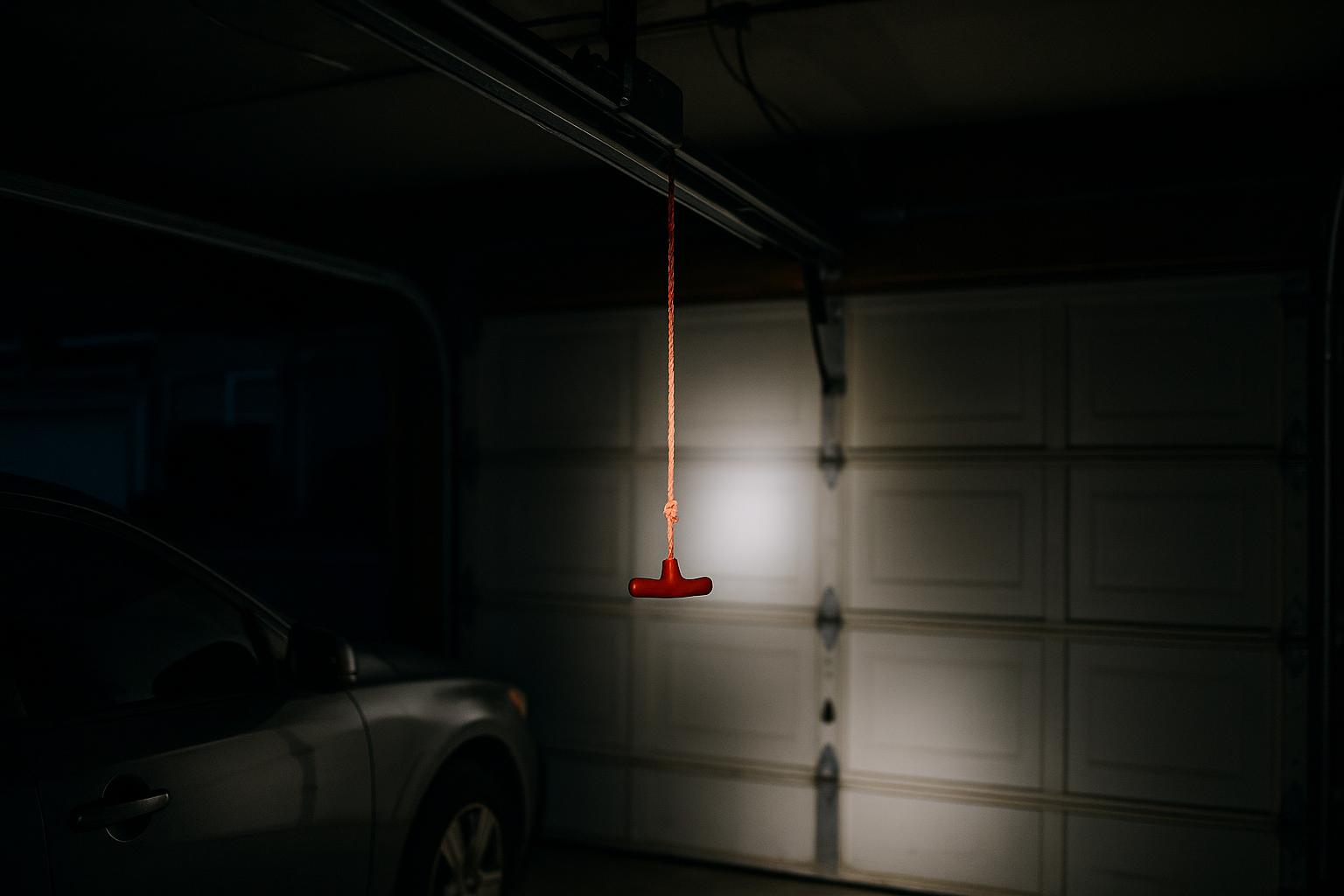
- The red cord: Hanging from the opener track near the motor, you'll see a red handle attached to a short rope or cord. This is your emergency release.
- The trolley: The red cord is connected to a trolley that rides along the opener rail. Pulling the cord disengages the trolley from the chain or belt drive, freeing the door to move independently.
That's really all there is to it mechanically. But there are some important safety steps to follow before you pull that cord.
Step-by-Step: Opening Your Garage Door During a Power Outage
Step 1: Make Sure the Door Is Fully Closed
Before you pull the emergency release, confirm that the door is in the fully closed position. If the door is partially open and you disengage the trolley, the door could come crashing down — especially if a spring is weak or broken. A falling garage door can weigh 150 to 250 pounds or more, and that's a serious safety hazard.
Step 2: Pull the Emergency Release Cord
Grab the red handle and pull it down and toward the garage door (away from the motor unit). You should hear or feel a click as the trolley disengages. The door is now free from the opener.
Step 3: Lift the Door Manually
With the trolley disengaged, grip the door at the bottom with both hands and lift straight up. If your springs are in good working condition, the door should feel relatively light — maybe 10 to 15 pounds of effort. If the door feels extremely heavy or won't stay open on its own, that's a sign your springs may need attention.
Step 4: Secure the Door
If you're leaving the garage, you'll want to close the door behind you and lock it. Most garage doors have a manual lock — a slide bolt or latch on the inside. Use it. With the opener disengaged, there's nothing preventing someone from lifting the door from outside.
Step 5: Re-engage the Opener After Power Returns
Once the power comes back on, you'll need to reconnect the door to the opener. For most models, simply pull the emergency release cord back toward the motor unit until it clicks into place. Then press your wall button or remote. The opener should catch the trolley and resume normal operation.
If the trolley doesn't re-engage automatically, try manually sliding it along the rail until it connects with the carriage. Your owner's manual will have model-specific instructions if needed.
What If the Door Feels Too Heavy to Lift?
A garage door that feels impossibly heavy when you try to lift it manually is telling you something important: the springs aren't doing their job. Garage door springs — whether torsion springs mounted above the door or extension springs along the horizontal tracks — are responsible for counterbalancing the door's weight. When they wear out or break, the full weight of the door falls on you.
Do not try to force a heavy door open. You risk injuring yourself or damaging the door and tracks. Instead, call a professional to inspect and replace the springs. If you're in Tallahassee or the surrounding areas like Crawfordville, Quincy, or Midway, our team can get your springs replaced quickly so you're not stranded again during the next storm.
Preparing Your Garage Door Before Storm Season
A little preparation goes a long way. Here are a few things Tallahassee homeowners can do now to avoid headaches during the next power outage:
- Practice using the manual release. Try it once while the power is on so you know exactly how it works. It takes 30 seconds and saves you from fumbling with a flashlight during a storm.
- Test the door's balance. With the opener disengaged, lift the door halfway and let go. It should stay in place. If it drops or rises on its own, your springs are out of balance and should be adjusted by a technician.
- Lubricate moving parts. Rollers, hinges, and springs operate more smoothly with regular lubrication. A silicone-based spray applied a couple of times a year reduces friction and makes manual operation easier.
- Keep a flashlight in the garage. It sounds simple, but having a flashlight within reach makes a big difference when you're trying to find that red cord in the dark.
- Consider a battery backup opener. Many modern garage door openers come with built-in battery backup systems. When the power goes out, the opener switches to battery power and operates normally. If your current opener doesn't have this feature, it may be worth upgrading — especially in a city where summer storms can knock out power regularly.
A Note About Security
When your garage door opener is disengaged, your garage is more vulnerable. The door can be lifted manually from outside, and most automatic opener locks won't function without power. If you're going to be away from home during an extended outage, make sure you've engaged the manual lock on the door itself. Some homeowners also add a simple padlock to the track to prevent the door from being opened from outside.
If you have an attached garage, remember that an unsecured garage door is essentially an unlocked entry point to your home. Take the extra minute to lock up.
When to Call a Professional
Operating your garage door manually during a short power outage is perfectly safe as long as everything is in good working order. But if you run into any of these situations, it's time to call for help:
- The door is too heavy to lift by hand
- The door won't stay open when raised halfway
- The emergency release cord won't disengage the trolley
- The opener won't re-engage after power is restored
- You notice broken cables, damaged springs, or bent tracks
At Tallahassee Garage Door Service, we help homeowners across Tallahassee, Havana, Monticello, and the surrounding communities keep their garage doors working safely and reliably — storm season and beyond. If your door gave you trouble during the last outage, give us a call. We'll inspect everything, make sure your springs and opener are in good shape, and help you prepare for the next one.