
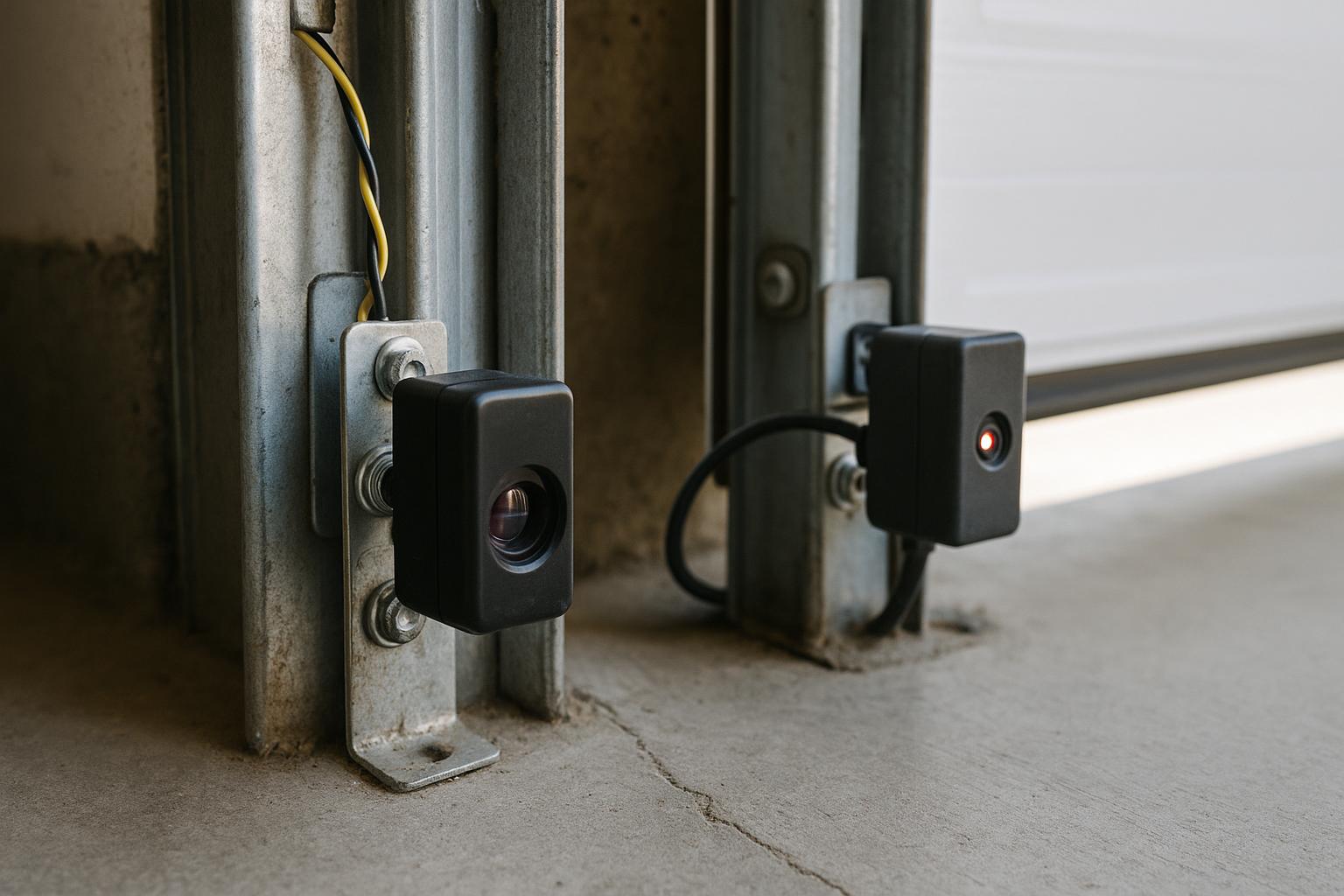
That Frustrating Moment When Your Garage Door Won't Stay Closed
You press the button on your remote, the garage door starts its descent, and then — just before it reaches the floor — it stops and reverses right back up. You try again. Same thing. Maybe you try holding the wall button down. Still nothing. It's one of the most common garage door complaints we hear from homeowners across Tallahassee, and it's more than just an annoyance. A garage door that won't fully close is a security risk, an invitation to pests, and in our humid Florida climate, a fast track to moisture damage inside your garage.
The good news is that this problem usually has a straightforward explanation. The bad news is that there are several possible causes, and diagnosing the right one matters. Let's walk through the most common reasons your garage door reverses before hitting the floor and what you can do about each one.
The Safety Sensors Are Misaligned or Blocked
This is the number one cause of a garage door that reverses before closing, and it's the first thing we check on every service call. Federal law has required photoelectric safety sensors on all residential garage door openers since 1993. These small sensors sit near the bottom of your door tracks on either side, and they send an invisible beam of light across the opening. If anything breaks that beam — a trash can, a bicycle, a leaf, or even a spiderweb — the opener interprets it as an obstruction and reverses the door to prevent injury.
Here's what to look for:
- Check for obstructions. Walk over to the sensors and make sure nothing is sitting in front of them. Even a small object can trigger the reversal.
- Look at the indicator lights. Most sensors have small LED lights. If one is off or blinking, that sensor may have lost alignment or power.
- Clean the lenses. Tallahassee's pollen seasons are no joke. A thin layer of dust or pollen on the sensor lens can weaken the beam enough to cause problems. Wipe them gently with a soft cloth.
- Check the alignment. If a sensor has been bumped — maybe by a lawnmower or a kid's bike — it may no longer point directly at its partner across the doorway. You can sometimes gently adjust the bracket by hand until the indicator light turns solid.
If you've tried all of this and the door still reverses, the sensors themselves may be failing or there could be a wiring issue. That's when it's time to call in a professional.
The Close-Limit Switch Needs Adjustment
Your garage door opener has settings called limit switches that tell it exactly how far the door should travel when opening and closing. If the close-limit switch is set incorrectly, the opener may think the door has hit something when it actually hasn't reached the floor yet. The opener's built-in safety feature then kicks in and reverses the door.
This is especially common after a new opener installation or if someone has recently adjusted the opener settings. On most modern openers, the limit adjustment is a small screw or dial on the back or side of the motor unit. Turning it in small increments can extend the travel distance so the door reaches the ground properly.
A word of caution: adjusting the close limit too far in the other direction can cause the door to press too hard against the floor, which puts unnecessary strain on the opener, the door panels, and the weatherseal. If you're not confident making this adjustment, we're happy to handle it during a quick service visit.
The Tracks Are Dirty, Damaged, or Misaligned
Your garage door rides along metal tracks on either side of the opening. Over time, these tracks can accumulate dirt, debris, and even rust — particularly here in Tallahassee where humidity accelerates corrosion. If the rollers encounter resistance as they move through a dirty or bent section of track, the opener may interpret that resistance as an obstruction and reverse the door.
Inspect your tracks visually. Look for:
- Visible dents or bends in the metal
- Buildup of grime or hardened grease
- Gaps between the track and the wall brackets
- Rollers that appear worn, cracked, or wobbly
You can clean the tracks with a damp cloth and a mild household cleaner. However, if you notice bends, gaps, or damaged rollers, those repairs are best left to a trained technician. Attempting to straighten tracks or replace rollers without the right tools and knowledge can create bigger problems — or worse, lead to an injury.
The Opener's Force Settings Are Too Low
In addition to limit switches, your garage door opener has force settings that control how much effort the motor applies when opening and closing the door. If the closing force is set too low, the opener may not have enough power to push the door all the way down, especially if there's even minor friction in the system. When the motor meets resistance it can't overcome, it reverses.
This can happen gradually as springs age and lose tension, as rollers wear out, or as temperature and humidity changes cause the door to expand slightly. Tallahassee homeowners often notice this problem more during the summer months when heat and moisture can affect door components.
Increasing the force setting slightly may solve the problem, but be careful. The force setting exists to protect people and pets. Setting it too high defeats the purpose of the safety reversal feature. If you need to crank the force up significantly to get the door to close, that's a sign of an underlying mechanical issue that needs professional attention.
Worn or Broken Springs Are Making the Door Too Heavy
Your garage door springs do the heavy lifting — literally. They counterbalance the weight of the door so the opener only has to provide a small amount of force to move it. When springs wear out or lose tension over time, the door becomes effectively heavier. The opener has to work harder, and it may trigger the safety reversal because it senses too much resistance.
If your door feels noticeably heavy when you try to lift it manually, or if it won't stay open on its own when you disconnect the opener, your springs likely need replacement. Spring replacement is one repair we strongly recommend leaving to professionals. These springs are under extreme tension and can cause serious injury if handled improperly.
When to Call a Professional
Some of the troubleshooting steps above — cleaning sensors, removing obstructions, wiping down tracks — are perfectly safe for any homeowner to try. But if you've gone through the basics and your garage door in Tallahassee still won't close properly, it's time to bring in someone who can diagnose the issue safely and accurately.
At Tallahassee Garage Door Service, we see reversing doors on a weekly basis, and the fix is usually quick and affordable. We serve homeowners and businesses throughout Tallahassee, Crawfordville, Quincy, and the surrounding communities. We'll show up on time, figure out exactly what's going on, and explain your options before we do any work.
A garage door that won't close isn't just inconvenient — it leaves your home exposed to weather, pests, and security risks. Don't let a small problem turn into a bigger one. Give us a call and we'll get your door closing the way it should.